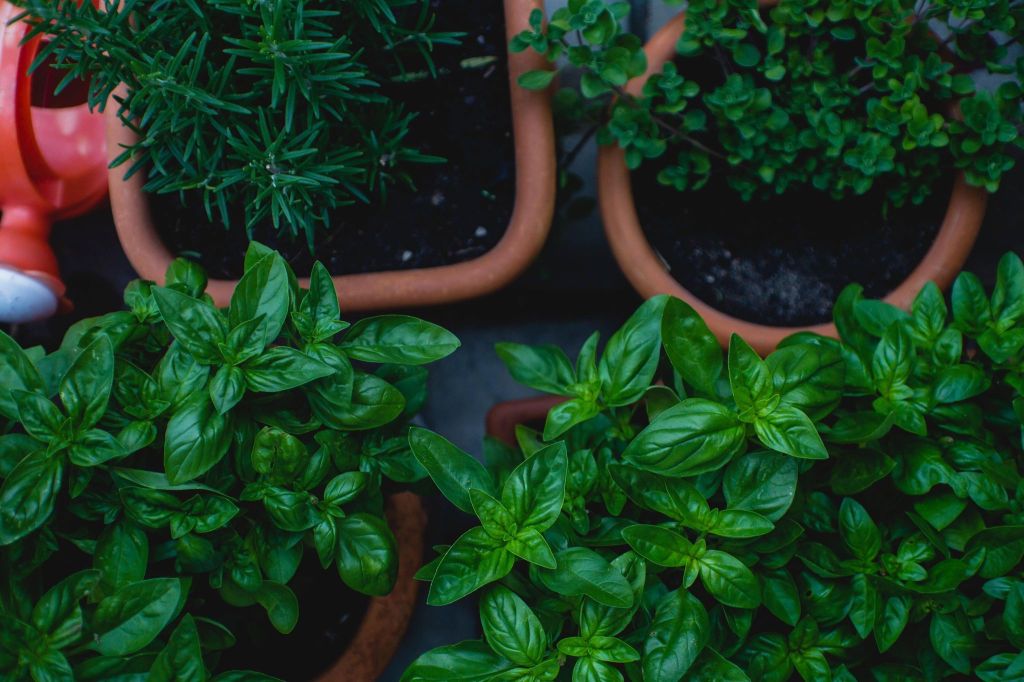
… on Herbal Books
I wasn’t sure what my first column would be, but when I recently responded to someone asking about herbs for a garden, way led onto way as things often do with me. The twist here is that we will focus on the books I used to select the herbs for that garden, rather than the herbs themselves. We will get to those at a later time.
In doing some quick research to respond to this request on plants for the magickal garden, I decided to look, not only at information in my traditional herb resources, but also delve into some of the newest books I’d picked up over the past few years. There seems to be an explosion right now in this area and I try to keep up to date. I composed my short plant list and then looked to see what the authors discussed about each herb. I have to say I was stunned with some of the newer books. Much to my surprise and chagrin, it’s clear some authors are not checking the medicinal and toxicity properties of these herbs. It’s vital to do so when using and recommending any plant, whether fresh or dried, when using root, stem, leaf or flower. It can literally mean life or death and even more so if someone is already on prescribed medication. As practitioners, we must always be aware of dangerous side effects and knowing our ingredients goes beyond our own personal use when dispensing knowledge and especially in recipes and remedies!
When I was in college in the late seventies, I worked part-time at our local public library. One night the librarian called and said can you take all your wildflower guidebooks and go to the hospital? A three year-old ingested a wild plant and they need you to identify it! Being in my twenties, I was in a panic state myself with no idea what I was up against. When I arrived, I was happy to discover hospital personnel had the plant and I recognized it as Phytolacca Americana (Pokeweed). The toddler, thankfully had only eaten berries, not leaves or roots. I had pictures in my guides and then they could call Poison Control with a positive identification. The child recovered, although his stomach was pumped which was not a pleasant experience for one so small. However, had he eaten the root and leaves, it would have been a very different story altogether and even worse had it been Actea pachypoda (white baneberry) commonly called Doll’s Eyes, which was what I was worried about.
Each plant part can make a difference as I mentioned earlier and this underscores the critical importance of understanding the biology and physiology of the herbs we use. I saw a recipe in one book listing leaves that were medically contraindicated for tea by the FDA. I find this very disturbing and quite reckless as the general public have no idea about the dangers of herbs and trust authors in general.
My advice is to use the very best reference books written on herbs by gardeners /botanists in conjunction with the best of these newer magickal herb books. Herb gardeners and especially botanists know their plants! It’s absolutely critical to cross-check these herbal toxicities before including these herbs in recipes or salves. Know the plant before you ingest it yourself or give it to someone. These plants have chemicals as do everything biological and they could affect your own health. There are several ways to learn about herbs. One is to find a local herb nursery. If you have access to a local library, check to see what they have in their collection and if they don’t have many books, you can always borrow from other libraries free of charge via interlibrary loan. Many botanical libraries are also accessible online so check for those collections as well. Another is to join the Herb Society of America or a local herb group. Take classes at your gardening centers or local cooperative extension. I’ve learned so much via all of these methods. Plus, once in a local herb group, friends want to share and who wants to turn down free plants or their deep knowledge? Then start building your reference library and planning and planting your garden. Build on what you learn from friends, experts, experience and research. Never stop learning and researching as we do learn more every year and become better herbalists.
I’m including a list of older favorites and well as some of the newer books where authors have done due diligence. Always double check herbs for safe use. Be very careful with the magickal herbs especially more so, if they are the poisonous ones.
From the Fairy Hill Farm Library (arranged by the fairies in no particular order)
Editors of Reader’s Digest. Magic and medicine of plants. 5th Ed., Reader’s Digest, 1986.
McIntyre, Ann. The Medicinal Garden: How to Grow and Use Your Own Medicinal Herbs Henry Holt, 1997.
Gladstar, Rosemary. Rosemary Gladstar’s Medicinal Herbs: A Beginner’s Guide: 33 Healing Herbs to Know, Grow, and Use. Storey Publishing, 2012.
Rose, Jeanne. Herbs and Things Putnam, 1979. (This is a must have classic!)
Bremness, Leslie. The Complete Book of Herbs: A Practical Guide to Growing and Using Herbs. Viking Studio, 1986.
Hartung, Tammy. Growing 101 Herbs that Heal: gardening techniques, recipes, and remedies. Storey Books, 2000.
Hawkins-Tillerson, Judith. The Weiser Concise Guide to Herbal Magick. Weisser Books, 2007.
McIntyre, Ann. The Complete Woman’s Herbal: A manual of healing herbs and nutrition for personal well-being and family care (Henry Holt Reference Book). Henry, Holt. 1995.
Kowalchik, Claire (Editor). Rodale’s Illustrated Encyclopedia of Herbs. Rodale Press, 2000. This is an excellent source of information with toxicity information including FDA information. Use http://www.fda.gov for the latest information from the FDA. PubMed is the public research catalog for the National Library of Medicine and available free to the public. They are also a great source of information on the latest in herbal research studies.
Gregg, Susan, The complete illustrated encyclopedia of magical plants. Quartro Publishing Group, 2008.
Nock, Judy Ann. The modern witchcraft guide to magickal herbs. Adams Media, 2019.
My next column will delve into some plants for the magickal garden.
Be magickal, be a muse(d), but above all, be canny. – Clary Sage
Get new content delivered directly to your inbox.
Mystical Musings
Be magickal, be a-muse(d), but above all, be canny.
Clary Sage http://learn.wordpress.com/
…on the Magickal Herb Garden
“Calendula strengthens the heart exceedingly.”
Nicholas Culpepper
The magickal herb garden can take on a variety of aspects depending on the gardener’s interests. As a longtime herb gardener, I began with the more traditional approach, looking for plants for medicinal uses – those for teas and tisanes, home remedies and brews. With the development of the internet, access to more restricted or arcane books and research became available and I was able to expand my knowledge. Interest in other areas grew when an uninvited plant hitched a ride in some purchased compost and I was unexpectedly catapulted into the world of magickal plants. Fortunately I checked with an experienced gardening neighbor prior to weeding my new invader or I might have gone on a magickal mystery tour I wasn’t quite expecting! That summer having already had a run-in with nettles made me think I might want to start wearing my rose gloves all the time!
These days we have virtually unlimited access to materials via the internet and open access resources like the Gutenberg Project where historical documents and entire archives are being digitized and made available freely to the public. In addition, more medically sound information on herbal remedies is available from sources like the the National Library of Medicine where you can research through PubMed to find the latest scientific research or Agricola at the National Library of Agriculture.
Using any herbs can be dangerous because they all contain chemical compounds, so be sure to know their contraindications before you use any as well as any possible interactions with medications you or anyone using the herbs might be taking.
The herbs for today’s column will focus on the Midsummer Herbs and these will be for both the traditional herb bed and for the potted herb garden. Some are extremely invasive and I will note that while others grow very tall and that may be problematic in a small space. I will not be recommending the poisonous varieties, but rather refer you to books where you can choose to learn about them. So let’s get started!

The Midsummer Herbs
I know a bank where the wild thyme blows. Where oxlips and the nodding violets grows. Quite over-canopied with luscious woodbine. With sweet musk-roses and eglantine.
‘A Midsummer Night’s Dream’ (1595-6) act 2, sc. 1, l. 249 – William Shakespeare

- Mugwort (Artemesia vulgaris) is best used to stuff dream pillows (it is said to produce vivid dreams) and no longer used for teas as it can be very dangerous if taken internally. It is considered one of the Midsummer Herbs, and was used as a crown on St. John’s Eve in the belief it protected the wearer from evil. It grows to 6 ft. and dries well for arrangements or wreaths.
- St. John’s Wort (Hypericum perforated) is another Midsummer Herb, believed to be most potent on his birthday, June 24th. It was believed to clear the air of evil spirits. It grows to 2 ft., but is not invasive. It is used as an anti-depressant, but can also be used to create a dye.
- Thyme (Thymus vulgaris or T. praecox subsp.) Thyme has long been associated with fairies. Shakespeare’s line. “I know a bank where the wild thyme grows,” from “A Midsummer Night’s Dream” is nothing but, a fairy bed of thyme. The uses for this tiny leafed-plant is endless. From anti-spasmodic to antiseptic, it has been prescribed for almost everything in its day. There are so many varieties now, it is used as a decorative plant in rock and miniature gardens. Nutmeg, caraway, elfin, lemon, variegated lemon, are just a few. In cooking it is indispensable to the chef. It’s antiseptic properties are still valuable in the medicinal garden for salves and balms. And be sure to check out any beds of thyme in case any elves or fairies might be napping…
- Rosemary (Rosmarinus officinalis) may be for remembrance, but it’s power lies also in that it is also a force against evil as well as bad dreams. This makes it another good herb for the dream pillows. Rosemary can be added to lemonade and it was used in drinks in the Middle Ages to also help banish evil that way as well. It can also be added to salves and balms for skin rashes, sores and irritations. Rosemary can be grown in the garden, but also in pots and indoors. It likes it cool and dry inside in the winter, but indirect light as it can dry out rather quickly.
- Rose – you may think this an odd selection for a list of herbs, but the rose is an old, old perennial that goes way back to medieval days. It’s use is found in everything from tinctures to love potions. The many types of roses can make a gardener heady with not only the scents, but the plants themselves! My favorites are the Gallicas and the Old English Roses for their profuse blooms and fragrances. Moss roses are also another favorite, although their spiny stems are challenging. Rosewater is easily made and often used in cookies and cakes. Love potions, skin lotions and salves are made from rose petals or rose buds. Roses are considered the flower to induce love and romance.
- Calendula – this is a sunny, colorful herb of midsummer. Often referred to as Pot Marigold (Calendula officinalis) as it is happy in containers. It also is excellent as a dye not only for fabric, but also in food such as rice and was a favorite of King Henry. It has long been used for salves and lotions and in teas and is especially good for stomach disorders. There are some precautions for pregnant women, so as always be sure to do your research about this herb before using.
- Violets or Violas – Like roses violets (viola odorata) may be overlooked as not an herb, but these again can find their place in the Midsummer Herb Garden. They are easily grown and can be invasive, but also easily weeded. They can be candied and also used to make violet jelly. Nothing is lovelier at a Beltaine Celebration than tea cakes decorated with candied violets and a summer tart or cake with violet jelly is perfect at Midsummer. Violas or Heart’s Ease known to us as Johnny Jump Ups (Viola tricolor) is easily grown from seed and and also spreads easy, but easily weeded. It’s an old-fashioned favorite and like its wild cousin can be used in jelly or candied or frozen in ice cubes for punch.
- Ivy – English ivy (Hedera helix) is an invasive vine, growing on both the ground and vertically up trees and any other structure; so if you add this to your property, beware! It will take over in no time at all. However, it is a perennial and remains green year round. It can be used in wreaths and crowns at solstices and other celebrations. It is usually used in love and fidelity charms and often paired with holly.
- Meadowsweet – Meadowsweet or Queen of the Prairie (Filipendula ulmaria) is a must have IF you have the room. This is a plant who IS Queen and does like any good monarch demand her space. She will be the crowning glory blooming from June through September with white or pink blooms of such sweet scent. Her name meadowsweet comes from the Anglo-Saxon word meaning mead sweetener. The flowers were strewn along a bride’s path and it was the favorite of Queen Elizabeth I. It is also considered to be a sacred Druidic herb and “the scent has the power to grant second sight and an ability to converse with the fairies.”1. Medicinally, it is used for a wide variety of complaints similar to elderberry. It can be used for indigestion, urinary tract infections, acid reflux, colds, fevers and flu. Different parts of the plant are used for different things. It is known to be a effective remedy for diarrhea and chewing on the root is helpful for headaches. Queen of the Prairie has been used commercially since 1890 and its benefits have long been recognized.
- Borage (Borago officinalis) is for courage, but more than likely it will make you smile. The bright blue star flowers are one of the most cheerful blooms in the herb garden. This fuzzy-leafed plant with it’s cucumber scented leaves produces a galaxy of little blue stars. It will cheerfully re-seed if the soil is loose and you should have plants each year. Compresses/poultices from leaves, candied flowers from the flowers or they can be frozen in ice cubes for punch. This is another versatile plant, but it can get leggy or sprawl if you don’t stake it.
- Vervain (Verbena officinalis) One of the most holiest and magickal of herbs. Used to protect one from witches, but also used by witches. This is one of the herbs hung over doors to protect people from evil spirits entering their homes on St. John’s Eve which is also Midsummer’s Eve: June 23rd. It is considered to be an antidote to enchantment. Many tales were written about its attributes, but whether they were true or not, Gerard and others were skeptical.
- Yarrow (Achillea millefolium) is another holy herb especially for the Irish who hang it at Midsummer to ward off evil spirits in their homes. As with vervain, it can be used against witches or by witches in their spells or herbal magick. Yarrow has also been used in divination. Yarrow is another herb which is considered the all-rounder or medicine chest and has many medicinal uses.
From the Fairy Hill Farm Library (arranged by the fairies in no particular order)
Dugan, Ellen. Garden Witchery: natural magick for hearth and home. Woodbury, MN: Llewellyn Publications. 1st ed. 2003.
Dugan, Ellen. Garden Witch’s Herbal: green magick, herbalism & spirituality. Woodbury, MN: Llewellyn. 1st ed. 2009.
Cunningham, Scott. Cunningham’s Encyclopedia of Magical Herbs. Woodbury, MN: Llewellyn, 1985.
Dunwich, Gerina. The Wicca Garden: a modern witch’s book of magickal and enchanted herbs and plants. Citadel, 2001.
O’Rush, Claire. The Enchanted Garden. Gramercy, 2000.
Richardson, Rosamond. Britain’s Wild Flowers: a treasury of traditions, superstitions, remedies and literature. London: National Trust, 2017.
Murphy-Hiscock, Arin. The Green Witch: your complete guide to the natural magic of herbs, flowers, essential oils, and more. Adams Media, 2017.
Hartung, Tammy. Growing 101 Herbs that Heal: Gardening techniques, recipes and remedies. Pownal, VT: Storey Books, 2000.
Roth, Harold. The Witching Herbs: 13 essential plants and herbs for your magickal garden. Weiser Books, 2017.
Simmons, Adelma. Herb gardens of delight. New York: Hawthorn, 1974.
References
- Richardson, Rosamond. Britain’s Wild Flowers: A treasury of traditions, superstitions, remedies and literature. London: National Trust, 2017. p.180
 Mystical Musings